Category: California Public Banking Alliance

Screenshot 2024-11-20 at 2.49.28 PM

Silicon Valley Bank’s Failure Shows Why We Need to Expand Public Banking

The Alliance’s Julian LaRosa’s latest piece in Jacobin. Silicon Valley Bank’s collapse was no aberration: hundreds of private banks in the US have failed since the Great Recession. For a more stable financial system that actually meets ordinary people’s needs, we need to expand public banking.

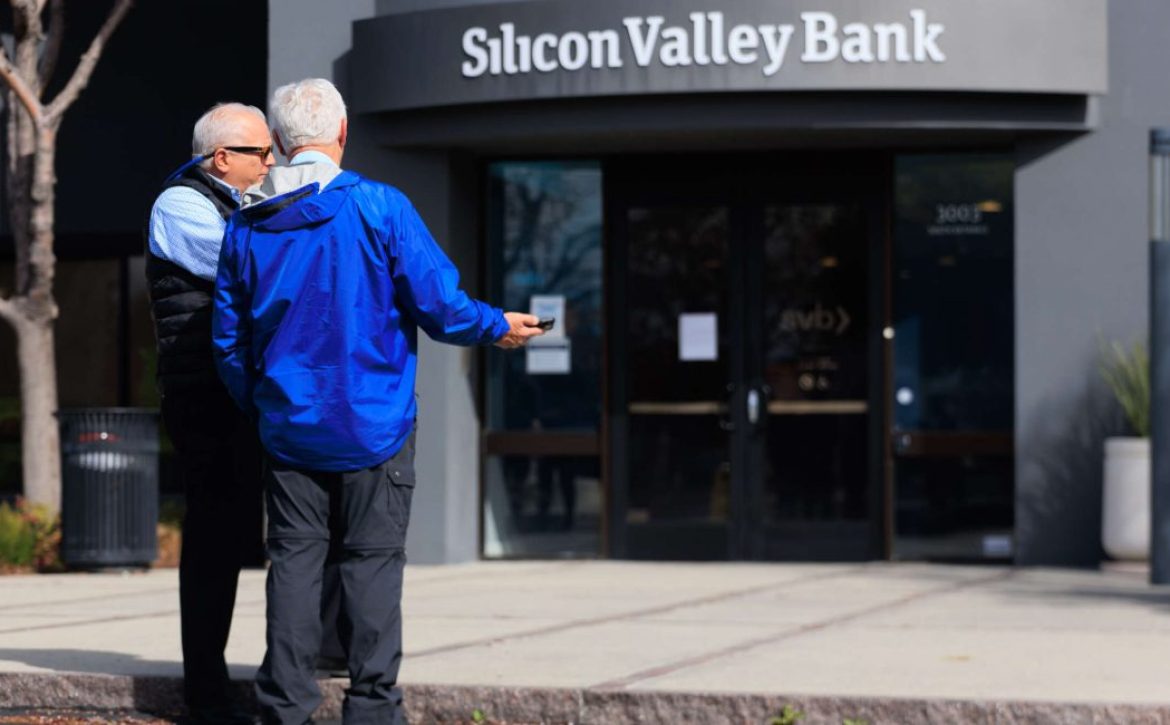
One of the great philosopher-artists of the 2000s and 2010s (though maybe not so much in recent years) once said, “No one man should have all that power,” and this nugget of wisdom has been ringing in my head over the past two weeks. In a Slack chat among prominent VCs and startup execs, Silicon Valley venture capitalist Peter Thiel orchestrated the beginnings of a bank run against one of the most influential banks and the financial backbone of the Bay Area tech scene, Silicon Valley Bank (SVB), ultimately bringing the bank to its knees within days.

What happened with Silicon Valley Bank? Because banks don’t keep all their deposits on hand — deposits are used to provide loans or to buy various securities like bonds — they rely on depositors not all coming for their bags at once. But occasionally, a wave of withdrawals leads to banks panicking and liquidating their assets to cover newly withdrawn deposits — sparking further hysteria as everyone races to get their money out. Then down goes the bank, sending shockwaves across the economy.

This is more or less what happened to Silicon Valley Bank after Thiel advised his portfolio companies to pull their deposits out of SVB. Over the weekend, the Federal Deposit Insurance Corporation (FDIC) intervened, closing the nation’s sixteenth-largest bank and forcing it to liquidate its assets and make depositors whole. In a couple days, we saw the largest bank failure since the Great Recession and the collapse of Washington Mutual.

Following the collapse of SVB, spooked depositors at Signature Bank rushed to withdraw $10 billion, triggering a federal closure of both banks to contain the potential contagion. Stocks across the financial sector then plummeted throughout the United States and across the pond. The year had already been a rough one for Credit Suisse, its stock price slumping even before the SVB-induced crash. But once the heat turned up and depositors started fleeing, the Swiss Central Bank stepped in to provide a $54 billion bailout to keep Switzerland’s largest bank afloat.

In the subsequent days, the press watched the situation like a hawk. Who would be next? Were we in for another Great Recession? Would workers be able to get their next paychecks?

Yet the corporate media missed a key point: banks, when left to their own devices, will fail. SVB certainly wasn’t the first, and it won’t be the last. Since the Great Recession over 560 banks have failed in the United States, often followed by Wall Street titans swallowing up their assets. Banks that were too big to fail in 2008 have grown still larger as the financial sector becomes more and more concentrated. Regulations meant to constrain financial chicanery have proven too weak to the task.

So the question is, what do we do moving forward? Do we continue to let the vultures prey on their dying competitors? Will the government keep having to bail out reckless banks?

Continue reading in Jacobin.

Read More
svb

The SVB and Signature Bank Crashes Show Why We Need Public Banking

March 18, 2023. Trinity Tran, Truthout.

We have a pivotal opportunity to reshape our financial system for the benefit of all.

The recent collapse of Silicon Valley Bank (SVB) and Signature Bank — the second and third largest bank failures in U.S. history respectively — has laid bare the vulnerability of the private banking sector.

With over 563 federally insured banks toppling between 2001 and 2023, it’s impossible to ignore: The status quo is unsustainable. Amid this financial turbulence, the need for public banking has never been more pressing. It’s high time we seriously consider public banking as a stable, transparent, and accountable alternative that would firmly anchor public interest at the heart of the financial system. After all, banking should be a public utility that benefits everyone, not a high-risk game played by bankers trying to score big profits.

The failures of SVB, Signature and Silvergate banks can be traced back to poor management decisions and high-risk strategies. SVB invested in long-term government securities amid concerns about rising interest rates as well as the volatile venture capital industry, while Signature and Silvergate banks ventured into speculative cryptocurrencies. All three banks shared one common problem: massive uninsured deposits from a handful of ultra-wealthy customers.

When the banks teetered on the edge of collapse, the Biden administration, FDIC, and Treasury swooped in with a bold bailout. They created a “systemic risk exception” to protect all deposits, even those beyond the $250,000 threshold. Ironically, all depositors were “made whole” from the Deposit Insurance Fund — the very fund that Silicon Valley Bank had previously lobbied against, arguing that increased contributions would hurt their bottom line.

This intervention raises a crucial question: If the government is ultimately responsible for ensuring the banking system’s stability, why not opt for public banks designed to serve the public interest from the outset?

Continue reading on Truthout.

Read More
sfinches

SF inches closer to creating a public bank

San Francisco is taking bold steps towards establishing a Municipal Finance Corporation that is set to become a public bank within the next three to five years. The city aims to launch the $50 million Municipal Finance Corporation, with a focus on financing infrastructure projects, affordable housing initiatives, and small businesses.

The establishment of a public bank in San Francisco has been a long-awaited goal for many activists and community leaders. Public Bank SF is expected to bring more transparency and accountability to the banking industry, putting the needs of the community first instead of prioritizing profits for shareholders.

The city’s decision to create a Municipal Finance Corporation is a crucial step in achieving this goal. The corporation will act as a bridge between the city and its residents, providing access to low-cost credit and financial services that are tailored to the community’s needs.

Read the article on SF Chronicle.

Read More
citycouncil

City Council Moves to OK Establishment of Public Bank for Oakland, East Bay

Oakland Post – Vice Mayor Rebecca Kaplan, a longtime supporter of strengthening funding for local small businesses and important public projects, successfully moved to approve the resolution along with the viability study. Kaplan had proposed the initial public bank study in the previous Oakland budget, and the regional multi-city collaboration that allowed the public bank effort to get to this stage.

The City of Oakland took another step toward establishing the Public Bank of the East Bay.

The Oakland Finance and Management Committee voted to approve forwarding District 3 Councilmember Carroll Fife’s resolution to the City Council meeting on Dec. 20, 2022, with the intent for the City of Oakland, in collaboration with Alameda County, City of Berkeley and City of Richmond, and additional cities as interested, to establish the bank.

Vice Mayor Rebecca Kaplan, a longtime supporter of strengthening funding for local small businesses and important public projects, successfully moved to approve the resolution along with the viability study. Kaplan had proposed the initial public bank study in the previous Oakland budget, and the regional multi-city collaboration that allowed the public bank effort to get to this stage.

“I want to thank everyone who has been working for many years to bring a public bank to the East Bay – not just to the City of Oakland – a regional collaborative of multiple governments that by standing together, can strengthen our economic opportunity and our ability to affordably finance needed projects and ensure access to funding for local small businesses and underserved communities,” said Kaplan.

The need and support for a public bank comes from the failing business model of many corporate banks that handle the vast majority of public funds in the East Bay and around the country which have consistently prioritized profits and serving the well-connected over community needs.

The biggest example of the failure of corporate banks is the Great Recession of 2008 when many banks engaged in predatory foreclosures and destabilized. But the Bank of North Dakota, the nation’s oldest public bank, was able to withstand the chaotic market trend while growing their fund and continuing to provide small business and student loans as well as economic and workforce development funds.

As reported in their mission statement, the vision for the Public Bank East Bay is to: “invest public monies from participating governmental agencies to meet the needs of local communities.

“PBEB will seek to return a reasonable, but not excessive, profit to its stakeholders by making economically sustainable loans and providing a high level of service to its partners and stakeholders.

“It will adhere to the principles of the United Nations Declaration on the Rights of Indigenous People, and will prioritize environmentally regenerative, culturally equitable and participatory practices that reverse discrimination against members of economically and socially marginalized communities.”

Originally posted in Post News Group.

Read More
climatejustice

Public Banking for Climate Justice

Public banks can drive the renewable energy revolution by investing in clean energy alternatives, divesting from fossil fuels, and building community wealth. Read “Public Banking for Climate Justice” by the Alliance’s Communications Director, Rick Girling, to learn more. “If we want a future other than ecological collapse, we need to remake the financial system that drives fossil fuel expansion. Public banks are key to this financial reformulation because they can be designed to require that climate action be a central focus of their lending.”

Read Public Banking for Climate Justice, published in the November/December 2022 issue of Dollars and Sense.


Read More
cpba

CPBA Takes Home the Equitable Futures Award

The California Public Banking Alliance (CPBA) received the Equitable Futures Award at the California Reinvestment Coalition award gala. Our important work in public banking and commitment to creating a more just and equitable economy for Californians was recognized in a stellar ceremony held in Los Angeles on November 3, 2022.

CPBA’s lead organizer, Trinity Tran, accepted the award on behalf of our all-volunteer statewide coalition for our work establishing two historic public banking bills in the California State Legislature, paving the way for the national public banking movement.The passage of the California Public Banking Act (AB 857) made California the first state in the nation to authorize the chartering of local public banks. CPBA followed that the next year by securing passage of the California Public Banking Option Act (AB 1177) which will provide universal financial services to unbanked and underbanked Californians.

These legislative victories will bring responsible banking services to municipalities and the general public, ensuring that cities can reroute scarce public dollars to fund essential services while enabling people to determine the future economic development of their communities. Additionally, these measures will aid in removing racial and economic inequities by making essential banking services accessible to all.

CPBA was recognized alongside our coalition compatriots SEIU California State Council, the largest public sector union in the state, and Assemblymember Miguel Santiago for championing progressive legislation, including the two public banking bills. The Alliance joined community members, allies and banking partners to celebrate the impact of our collective work on local communities.

Our coalition of public banking activists throughout California was founded in 2018 to create socially and environmentally responsible city and regional public banks. Since then, we’ve expanded our focus to make free basic banking services like check-cashing, direct deposit, and debit card accounts available to all Californians, removing barriers to financial stability that stand in the way of many working families.

Read our latest newsletter on our Equitable Futures Award and sign up on our home page to stay connected the California public banking movement.

Read More
bankingrounup

California Public Banking Roundup!

The latest updates from cities and regions throughout California working to create municipal banks.

Central Coast – People for Public Banking Central Coast are optimistic that Santa Cruz County may soon issue an RFP for a Central Coast Public Bank viability study.

East Bay – The East Bay Viability Study was approved by Richmond in April 2022, and is likely to be approved by Berkeley and Oakland in September. There have been fundraising efforts by SF Foundation and East Bay Community Foundation who hosted two “convenings” including an introduction to public banking from David Chiu and Eric Hardmeyer—the recording is available here. Gary Findley, the East Bay consultant, has vetted most of the bank board candidates and is working on the business plan.

Los Angeles – The RFP for the Los Angeles public bank viability study and business plan has been issued by the City of Los Angeles’s Chief Legislative Analyst’s office. Consultant responses are due September 2, 2022. Two think tanks, the Berggruen Institute and Jain Family Institute, have assembled five working groups to analyze aspects of the Los Angeles public bank’s business plan: housing, small business lending, employee ownership, climate-centered lending, and the greater financial ecosystem. The report is expected to be completed by early 2023.

Los Angeles County – There are ongoing discussions on the formation of a Los Angeles regional public bank including the County and multiple cities.

Pomona Valley – The Public Bank Pomona Valley study group have met monthly since 2019, hosted online Town Halls, sent quarterly newsletters to our mailing list, supported the efforts of CPBA, and met with local elected officials and civic groups to educate and inform about public banking efforts. Visit bit.ly/76PBPV to find out more.

San Francisco – There have been 5 meetings of the Reinvest in San Francisco Working Group (RWG), community representatives and financial experts charged with developing a public bank business plan for SF. SFPBC is proposing a governance plan to the Working Group, as well as offering input for community engagement with consultants from Contigo who will convene focus groups with various sectors of the community. The bank plan consultant, HR&A Associates, is moving forward on plans for a revolving loan fund that will transition into a public bank by 2028.The latest updates from cities and regions throughout California working to create municipal banks.

Read More
eastbayactivites

East Bay Activists Unveil New Blueprint for a Regional Public Bank

NextCity – Twice a year, when property owners pay their local property tax bills, Alameda County Treasurer Hank Levy sees a huge influx of cash into county coffers. After paying off the county’s own bills and other expenses, there’s always some cash left over that doesn’t need to be spent right away — though it’s all earmarked for salaries, programs, projects and other costs that come up later. As do most local or state treasurers, Levy’s office invests whatever he doesn’t need to spend right away, earning some interest for the county in the meantime.

Right now, Levy’s office holds an investment portfolio of around $7 billion. About half of that is invested in U.S. Treasury Bonds or other securities backed by the Federal Government — assets that don’t earn very much interest right now but they are considered “highly liquid,” meaning Levy can sell them easily to other investors when the county needs the cash. Another 20% of the portfolio is invested in certificates of deposit at banks, which Levy can schedule out to mature on a fixed timeline that matches up with the county’s cash flow needs. Levy recently moved $200 million into certificates of deposit at 10 local banks that committed to lend at least the same amount to Alameda County residents and businesses.

A group of local activists want to give Levy a new option for the county’s portfolio — depositing some of that $7 billion in a public bank, meaning a bank that’s owned by a unit of government, holds cash from those governments, and whose lending policies and priorities are set democratically by constituents.

Friends of a Public Bank East Bay formed in 2017 to push for such a bank. It released a blueprint in March for a bank that would be jointly owned by Alameda County as well as the Cities of Oakland, Berkeley and Richmond. The blueprint envisions the bank would make loans to support more deeply and permanently affordable housing, for small businesses owned by Black, indigenous and other people of color, and potentially even do some infrastructure lending for municipalities. It would be modeled in part on the Bank of North Dakota, established in 1919 and until recently the only state-owned bank in the country. Nearly all of the Bank of North Dakota’s deposits come from the state government, which is required by law to deposit all of its revenues in the state-owned bank.

Continue reading on NextCity.org.

Read More
proposalsforpublicbanks

Proposals for Public Banks Move Forward in Several States

People’s World – For too long a handful of corporate banks have controlled the financial destiny of the overwhelming majority of Americans. Throughout American history, a commercial oligarchy was responsible for feeding corporate greed and when markets collapsed from too much debt and not enough resources to adequately fund it, countless millions of workers and their families paid the price for other people’s folly and suffered disastrous consequences.

In recent years there have been severe recessions, collapsing financial markets, and subsequent government bailouts of corporate banks, protecting the interests of stockholders at the expense of depositors and helpless debtors.

There are alternatives to corporate banking though there are very few available to consumers.

The traditional savings, or building and loans, prominently featured in the Christmas classic “It’s A Wonderful Life,” are being swallowed up and taken over by larger corporate banks as a direct result of banking deregulation in the 1980s.

Recently there have been proposals in various states to authorize the creation of state-owned banks. There is already one state-owned bank in North Dakota that has been in existence for nearly a century and has been very successful in providing loans and other means of financial support to small farmers and business owners, as well as consumers.

The Governor of New Jersey, Phil Murphy, has also proposed a state-owned bank and made it part of his campaign platform when he ran for governor in 2017. In 2018 a bill to establish such a bank was introduced in the state legislature, and in 2019 Murphy signed an executive order creating a commission, known as the Public Bank Implementation Board, to provide exact details on how the bank would be established.

That same year California Governor Gavin Newsom signed into law the Public Banking Act which empowers county and municipal governments to establish their own community owned banks, and last year the New York Public Banking Act was introduced in the New York State Assembly, and the State Senate. Unfortunately, the recent pandemic, and fierce opposition from corporate banking and business interests, have delayed and frustrated attempts to proceed with successfully establishing publicly owned banks.

Continue reading on People’s World.

Read More
bankofgood

Californians Need A “Bank of Good”

Public banking is on a roll! On Wednesday March 30, 2022, over 170 community members joined the California Public Banking Alliance (CPBA) Town Hall featuring elected officials from cities and regions actively working to form public banks. People across the nation are turning out to learn more about public banking — and Californians are at the forefront of making public banks a reality for the first time in generations.

Public banking activists, politicians and financial experts are busy producing viability studies and business plans so that public banks can come online in the near future. Public banks are a powerful tool to keep taxpayer dollars reinvested in local communities. We’re grateful for the leadership provided by legislators from five cities (Los Angeles, San Francisco, Long Beach, Richmond, and Santa Cruz) joining us to discuss their commitment to making public funds work for the public by their courageous efforts to establish local public banks.

If you missed last week’s town hall, tune in to the replay.


Thank you to all participants for joining in a robust town hall chat. We’ve added answers to your questions and comments in this document.

Read our event wrap-up on the CPBA Medium page.

Read More